
Dealership vendors
Dealer inventory, tracked the way dealers ask about it
Reconditioning work for a dealership is high volume, low ceremony, and relentlessly about turnaround. The used car manager wants to know which units can go back on the lot today — and they want one invoice, not thirty.
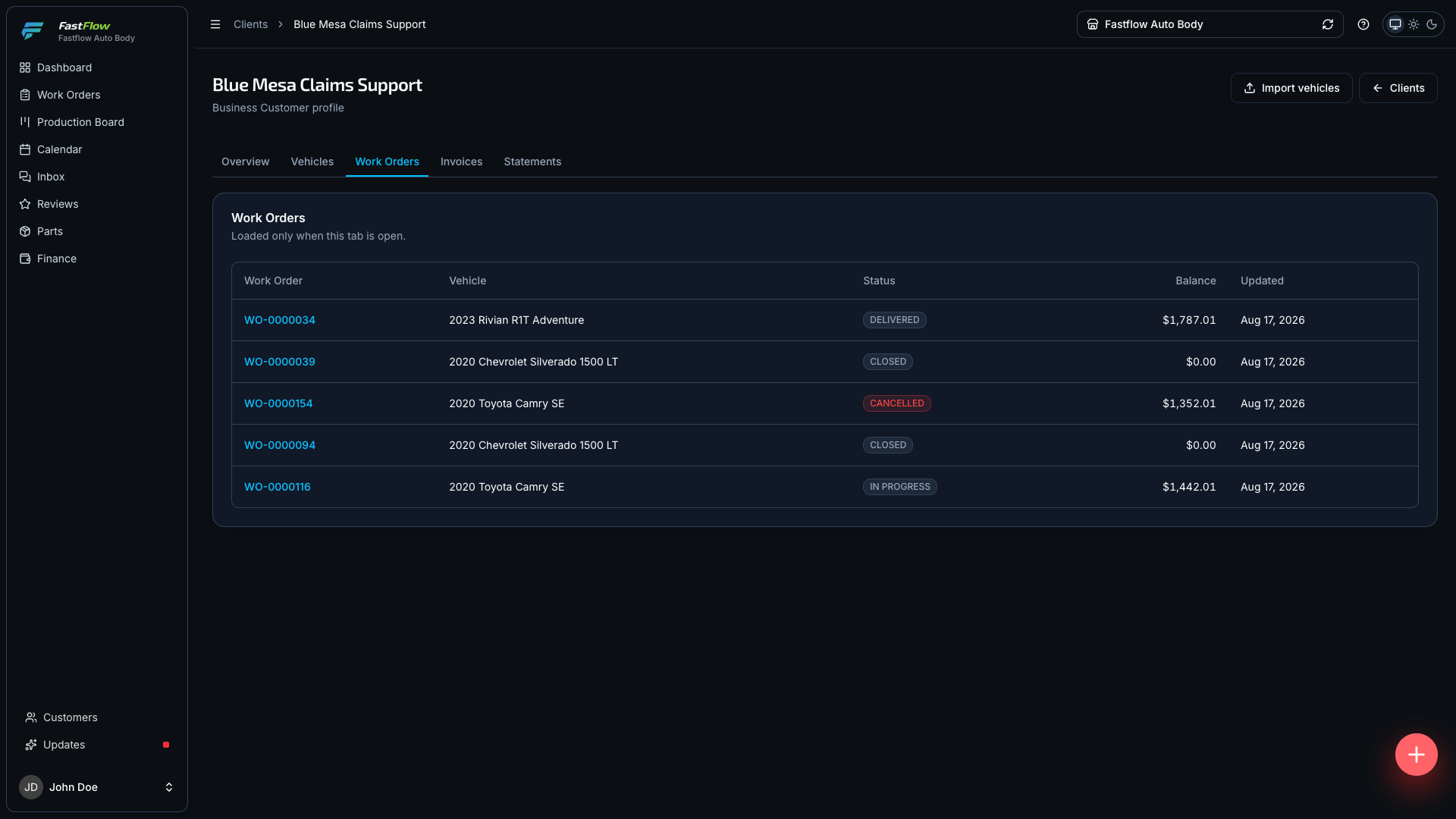
The dealer calls about eight cars at once
Recon volume arrives in batches and leaves in batches. The used car manager is not asking about a repair order — they are asking which stock numbers are done, which are delayed, what can go back on the lot today, and what they owe. Answering that from a system that only knows about individual jobs means somebody rebuilds the list by hand every morning.
What carries the weight
What recon volume actually needs
Batch intake by stock number
Bring in a group of units from a spreadsheet in one pass, with work orders opened for each, instead of keying thirty vehicles one at a time.
The dealer checks status themselves
One portal link shows every unit you hold for them, the stage each one is at, and a comment thread per vehicle. The morning phone call about eight cars stops being necessary.
Turnaround you can actually prove
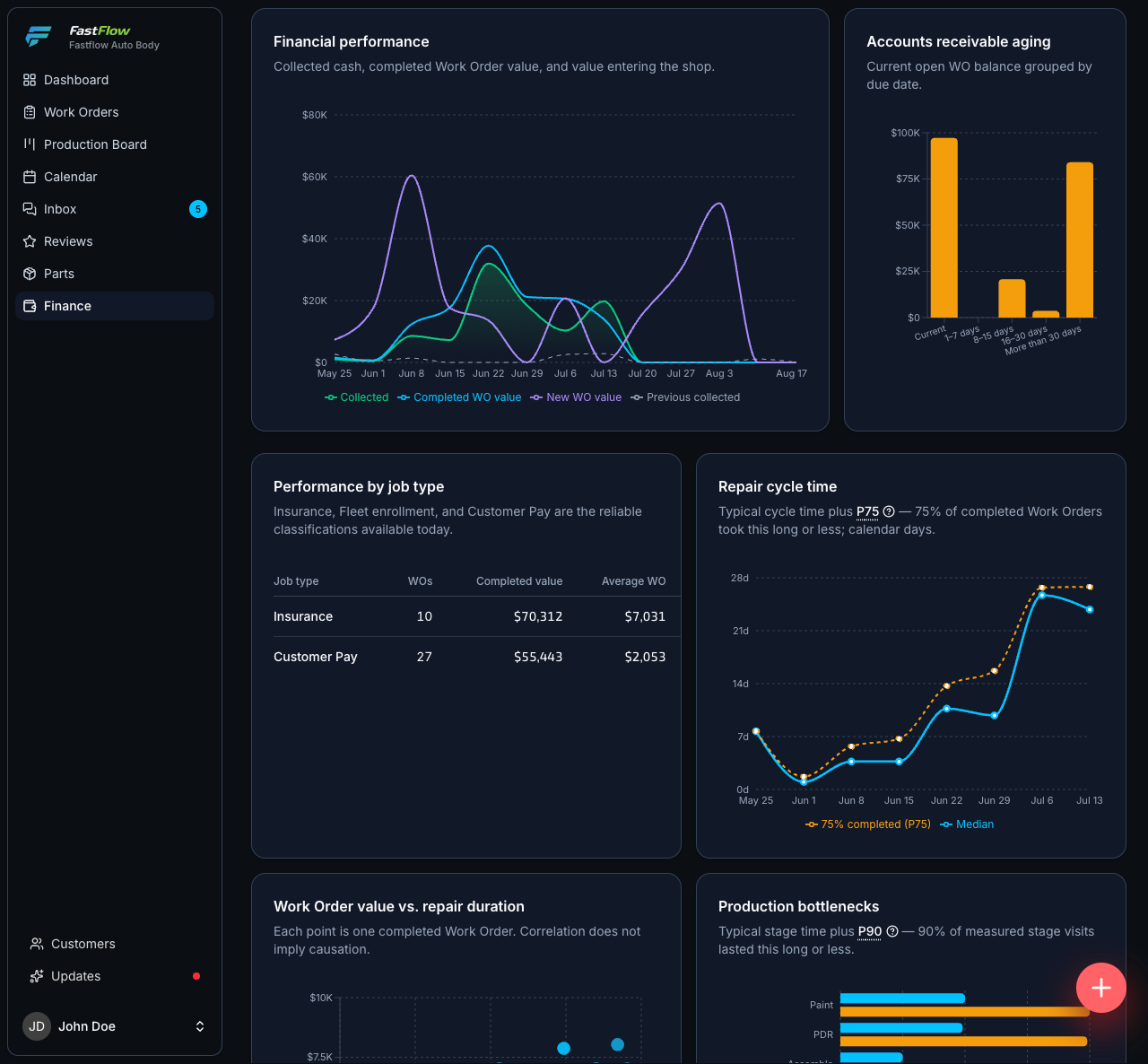
Keep the account by showing the number it is judged on. Cycle time by median and P90, plus which stage is holding units longest — measured from real status events, not from a spreadsheet somebody maintains.
One invoice, one payment
Consolidate the month’s completed units onto a single numbered invoice and apply the dealer’s one payment across them — oldest first, proportionally, or exactly how you decide.
Stock numbers alongside VINs
Vehicles carry stock number and plate as well as VIN, so a unit can be found the way the dealer asks about it rather than the way your system files it.
Value confirmed before the work starts
The dealer confirms the agreed figure per unit on the portal, captured with their name and a timestamp — so the invoice at month end is not the first time the number is discussed.
What changes for the shop
- Which units are done
- Every unit you hold, by stock number and stage, on a link the dealer can open themselves.
- Which are delayed, and why
- Parts, supplement, technician or QC — the reason is on the record, not reconstructed on a call.
- Turnaround on evidence
- Median and P90 cycle time, plus duration by stage, measured from real status events.
- What they owe
- One consolidated invoice a month, one payment applied across the units, one statement.
In practice
A month of recon work
- 1
Thirty units are imported from the dealer’s list, with a work order opened for each.
- 2
Each unit moves through its stages, visible on the shop-floor board by stock number.
- 3
The used car manager checks the portal instead of calling, and confirms values as they go.
- 4
Two units need extra work; supplements are raised and tracked to approval.
- 5
Stage duration shows which step is holding units longest, so the fix is aimed at the right place.
- 6
The month’s completed units are consolidated onto one invoice.
- 7
The dealer pays once, and the payment is applied across all thirty jobs.
Turnaround
The number the account is judged on
Recon is bought on speed. FastFlow measures it from the same status events the floor is working against, so the figure you quote the dealer is the figure the shop actually produced.
Median and P90 cycle time answer how long units take. Duration by stage answers where the days are going — which is the version you can do something about before the next batch arrives.
Horizontal bars for the repair stages Disassemble, PDR, Bodywork, Paint, Assemble and Detailing. The Paint bar is far longer than the others and is flagged as the stage holding vehicles longest.
- Disassemble
- PDR
- Bodywork
- Paint Longest stage
- Assemble
- Detailing
Total cycle time tells you the shop is slow. Duration by stage tells you where, which is the only version of the number you can act on this week.
See it running on your own numbers
30 minutes, screen shared: your workflow inside FastFlow, from intake to final payment. No slide deck.