
Collision & body shops
The whole job, from the first message to the final payment
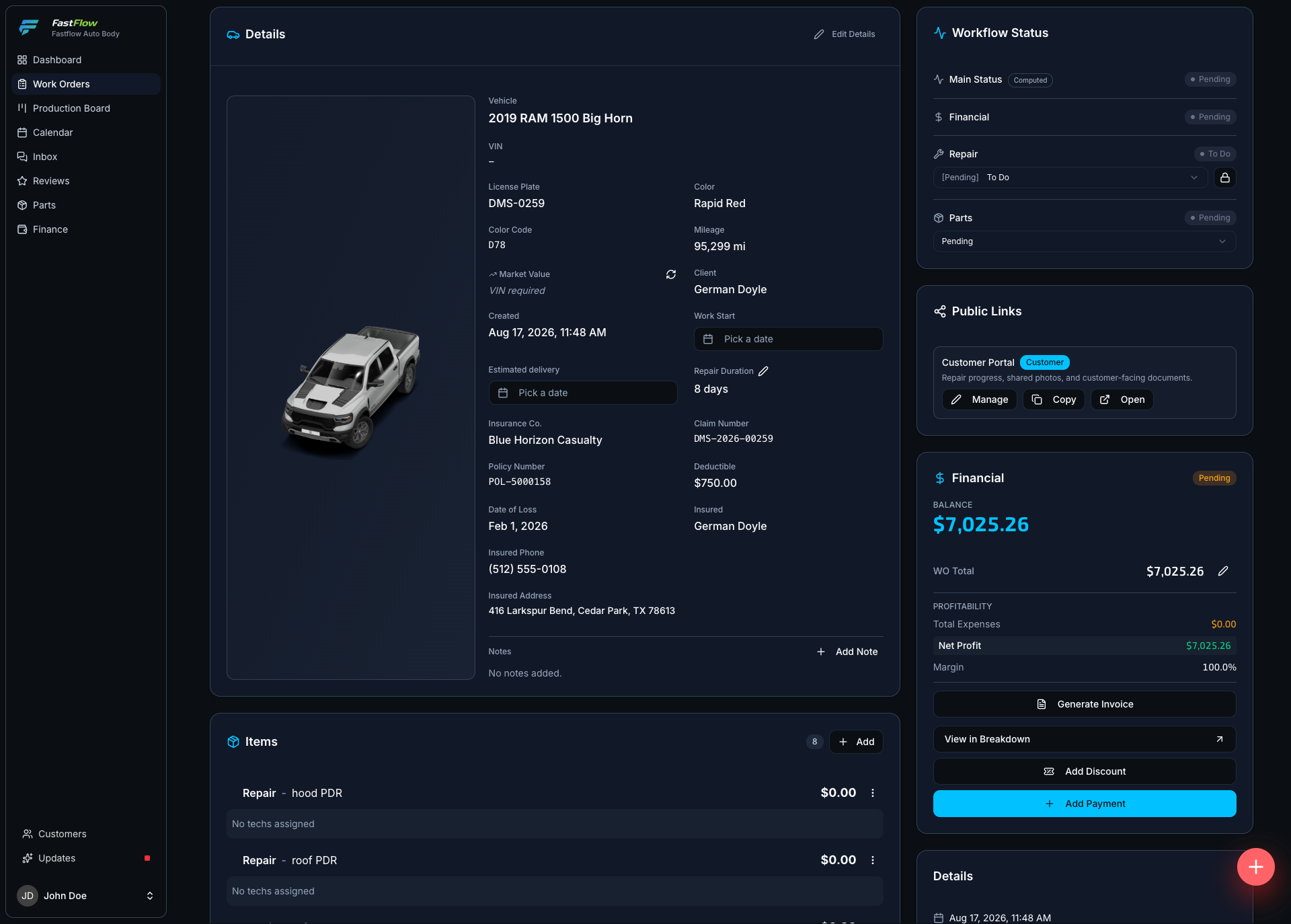
Collision work has more moving parts than any single tool tracks. FastFlow keeps the repair, the parts and the money on separate dials, so you always know which one is actually holding the car — and every step carries the last one forward instead of being re-typed.
“Where is my car?” is the most expensive question in the shop
Answering it means checking the board, then the parts order, then the estimate, then asking the technician. Multiply that by every customer who calls, every adjuster chasing a supplement, and every morning spent reconstructing what happened yesterday. None of that time is repair time, and none of it shows up in your numbers as the cost it is.
What carries the weight
What a collision shop actually runs on
Repair, parts and money tracked separately
Four independent status tracks mean a car waiting on a backordered bumper is never confused with a car waiting on a technician — and a backorder flags the job on the board without anyone reporting it.
Estimates that become work orders
Line items across hail, mechanical, R&I, parts, paint and body. An approved estimate converts to a work order carrying the vehicle, the panels and every line with it — so the shop stops paying twice to enter the same job.
Supplements without the chase
Hidden damage is raised as a supplement, tracked to approval or rejection, and escalated on the board once it has waited too long — so an unanswered supplement stops being something you discover at delivery.
Parts across every job
Track each part from quoted to delivered with vendor and price, then see everything needed across all open jobs and order it from one vendor in a single purchase instead of three.
Check-in and check-out that settle disputes
The same thirty-six point list on the way in and the way out, with a photo required on anything marked not OK. The argument about the scratch on the door ends with a timestamped image.
Screens on the floor
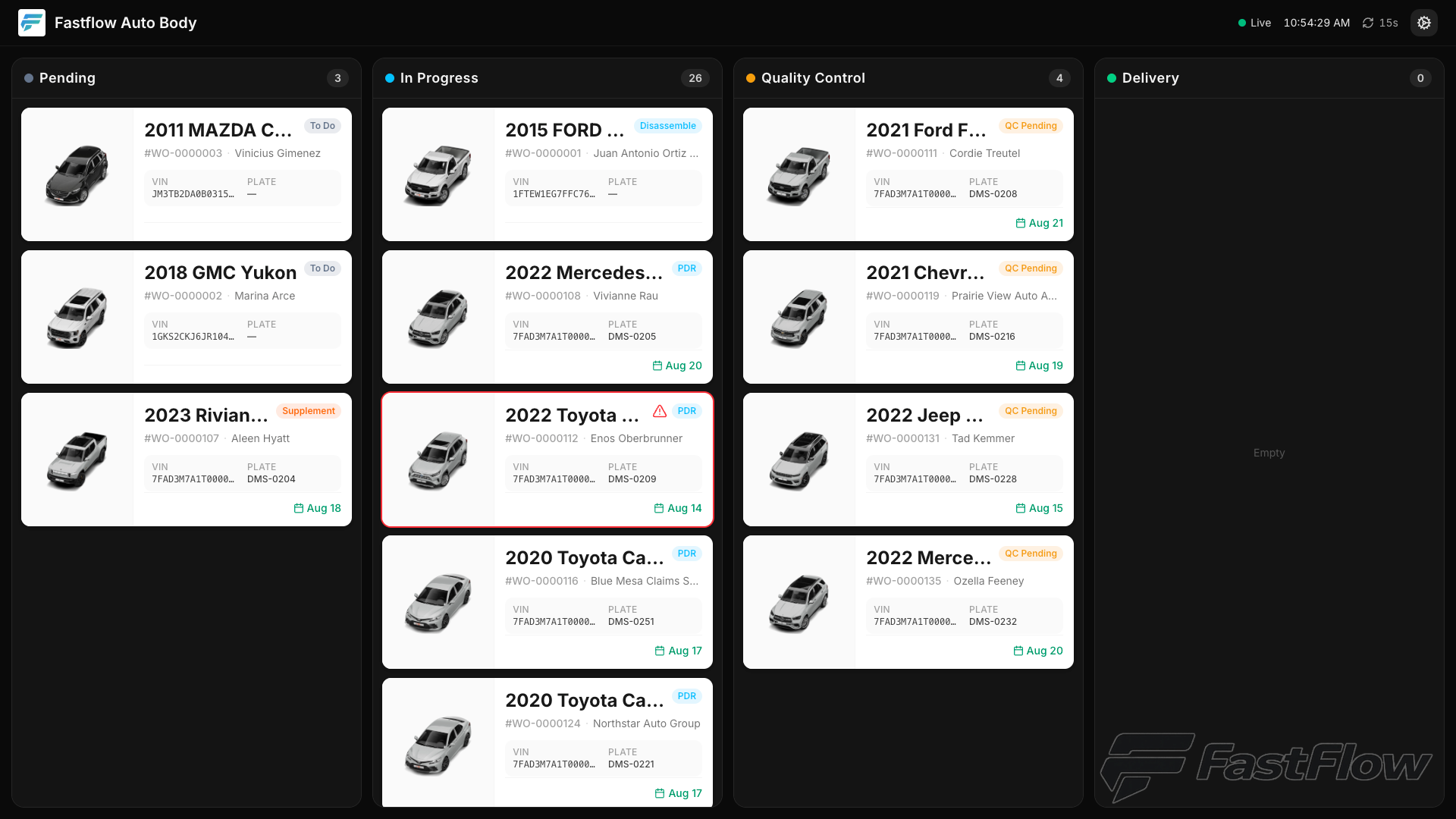
A lobby board customers can find their own car on, and a technical board showing panels, technicians, parts and supplements. Both pair with a six-digit code — no account and no password sitting on a screen anyone can walk up to.
What changes for the shop
- Entered once
- Triage becomes the estimate becomes the work order becomes the final bill.
- Always answerable
- Why a vehicle is not moving — part, supplement, technician or QC — is on the record, not in someone’s head.
- Fewer status calls
- The customer has a link that is always current, so the front desk stops being a switchboard.
- Paid on what was done
- The closeout invoice can change without disturbing the numbers technicians are paid from.
In practice
A collision job through the shop
- 1
A customer texts a photo of the damage; the message lands in the inbox and becomes a lead.
- 2
Intake photographs the four corners, VIN, odometer and plate against guided slots.
- 3
The estimate goes out; the customer asks for a change from their phone, which keeps the quote open instead of killing it.
- 4
On approval it becomes a work order, carrying the vehicle, panels and lines, with service items assigned to technicians and their splits.
- 5
Parts for three open jobs are ordered from the same vendor in one purchase.
- 6
The board flags the car once it has sat too many days in paint.
- 7
The customer follows progress on a branded link instead of calling the front desk.
- 8
The final bill comes off the work order, and the payment posts to a balanced ledger.
See it running on your own numbers
30 minutes, screen shared: your workflow inside FastFlow, from intake to final payment. No slide deck.